Industry
Lifestyle
Duration
3 months
Role
Product Designer
Fam Cal
Fam Cal
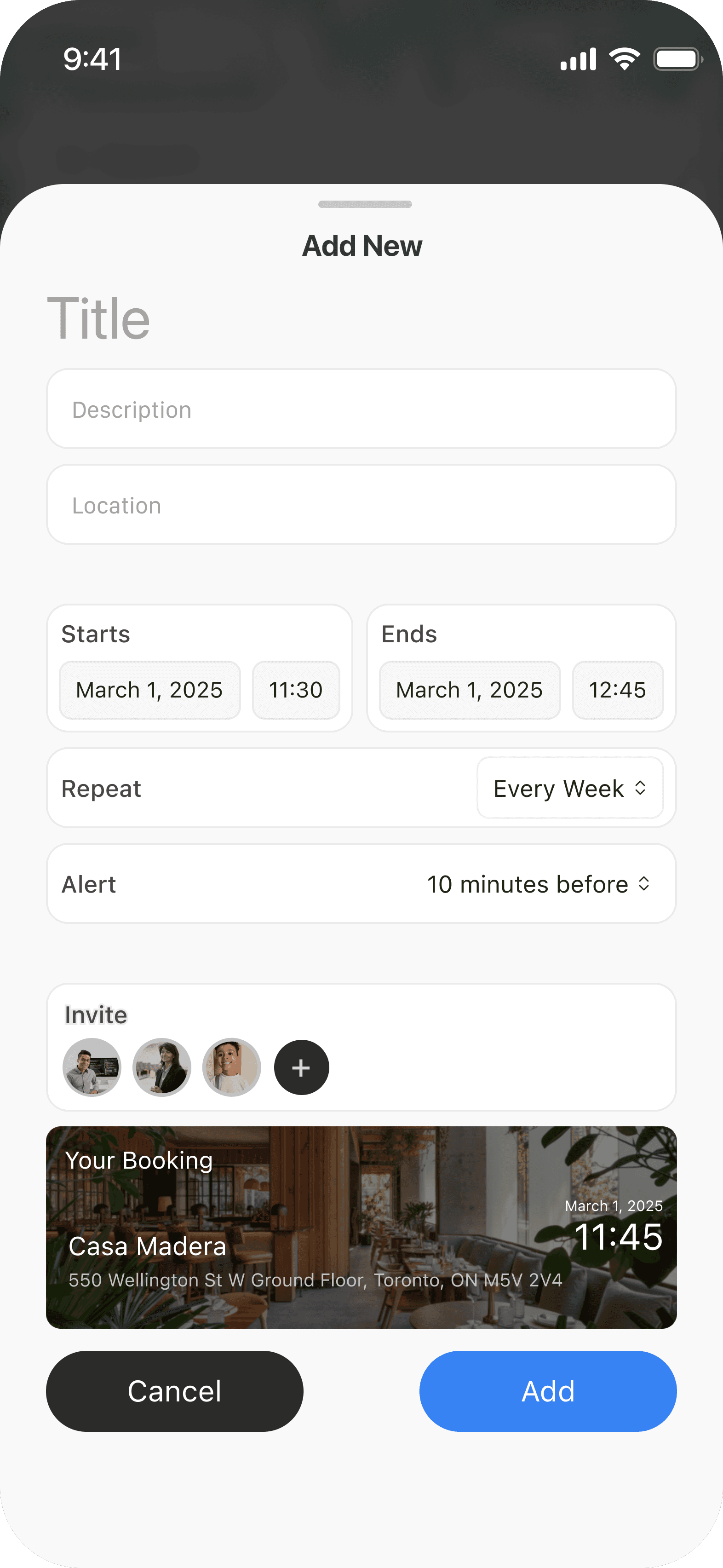
A family calendar app designed to simplify everyday coordination. Effortlessly manage activities, share responsibilities, and plan meaningful time together—all in one place. Whether you're parents juggling a child’s schedule or a couple organizing daily life, FamCal helps reduce stress, keep everyone aligned, and stay connected.
A family calendar app designed to simplify everyday coordination. Effortlessly manage activities, share responsibilities, and plan meaningful time together—all in one place. Whether you're parents juggling a child’s schedule or a couple organizing daily life, FamCal helps reduce stress, keep everyone aligned, and stay connected.
Background
Background
Background
Modern families struggle to stay aligned amid busy, shifting schedules. Parents face stress from constant coordination, with responsibilities often unevenly shared. With over half reporting work–life balance challenges, there’s a clear need for a simple, collaborative way to organize schedules, share responsibilities, and reclaim quality time together.
Modern families struggle to stay aligned amid busy, shifting schedules. Parents face stress from constant coordination, with responsibilities often unevenly shared. With over half reporting work–life balance challenges, there’s a clear need for a simple, collaborative way to organize schedules, share responsibilities, and reclaim quality time together.

David Chen
David Chen
David Chen
45 yrs, Sr. SWE based in Toronto, married, one 12-year-old daughter
45 yrs, Sr. SWE based in Toronto, married, one 12-year-old daughter
"I just want to spend more time with my family, but between my work schedule and everyone's activities, it feels almost impossible to get us all on the same page."
"I just want to spend more time with my family, but between my work schedule and everyone's activities, it feels almost impossible to get us all on the same page."
Frustration
Family’s schedules are always changing, especially his daughter’s extracurriculars
Weekends feel chaotic or wasted due to misaligned availability
Goals
Spend more time with wife and daughter
Easily coordinate schedules
Keep weekends more organized and free for family activities

Eleanor Foster
Eleanor Foster
Eleanor Foster
43 yrs, Assistant Professor based in Toronto, married, one 12-year-old daughter
43 yrs, Assistant Professor based in Toronto, married, one 12-year-old daughter
"I can handle my work just fine. It’s the unpredictable family stuff that throws me off. I wish I had more space to breathe, to plan, and to just take care of myself once in a while."
"I can handle my work just fine. It’s the unpredictable family stuff that throws me off. I wish I had more space to breathe, to plan, and to just take care of myself once in a while."
Frustration
Handle last-minute changes in her daughter’s schedule
Can’t plan her own time because
Often ends up sacrificing her personal time to keep things running smoothly
Goals
Stay on top of her daughter’s schedules
Plan time for herself, especially for yoga and quiet moments
Help the family stay more coordinated without being the “default scheduler”
Secondary Research
Secondary Research
Secondary Research
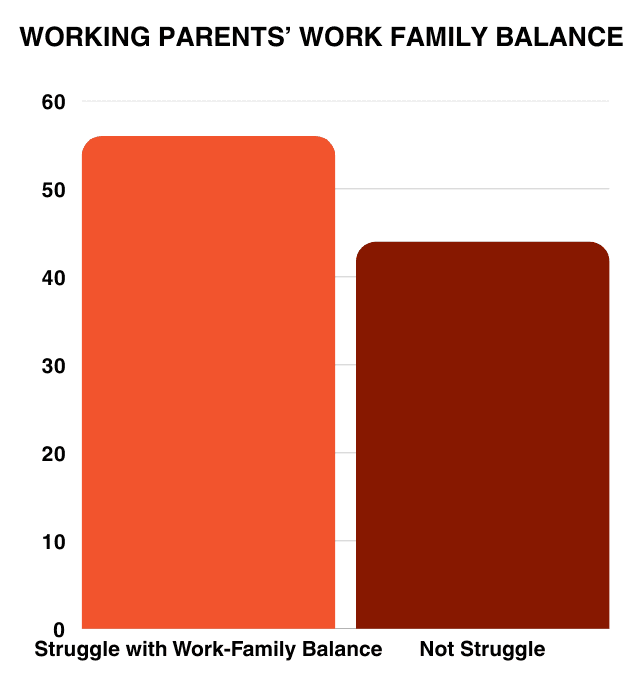
56%
56%
Parents Struggle with Work-Family Balance
Parents Struggle with Work-Family Balance
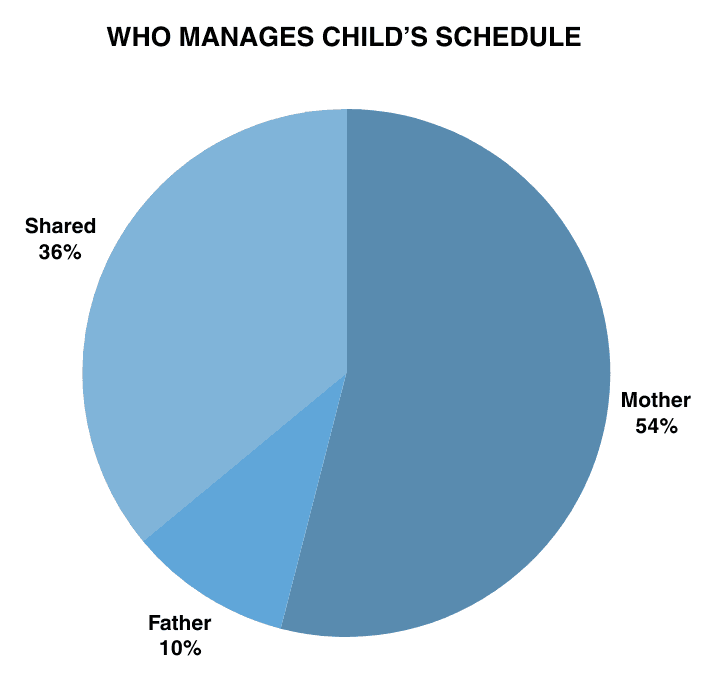
54%
54%
Child's Schedule is Managed by Mother
Child's Schedule is Managed by Mother
36%
36%
Child's Schedule is Shared by Parents
Child's Schedule is Shared by Parents
Design Challenge
Design Challenge
Design Challenge
Parents need a way to manage family's schedule, particularly their children's activities, because the responsibility often disproportionately falls on one parent despite scheduling being a joint family effort.
Parents need a way to manage family's schedule, particularly their children's activities, because the responsibility often disproportionately falls on one parent despite scheduling being a joint family effort.
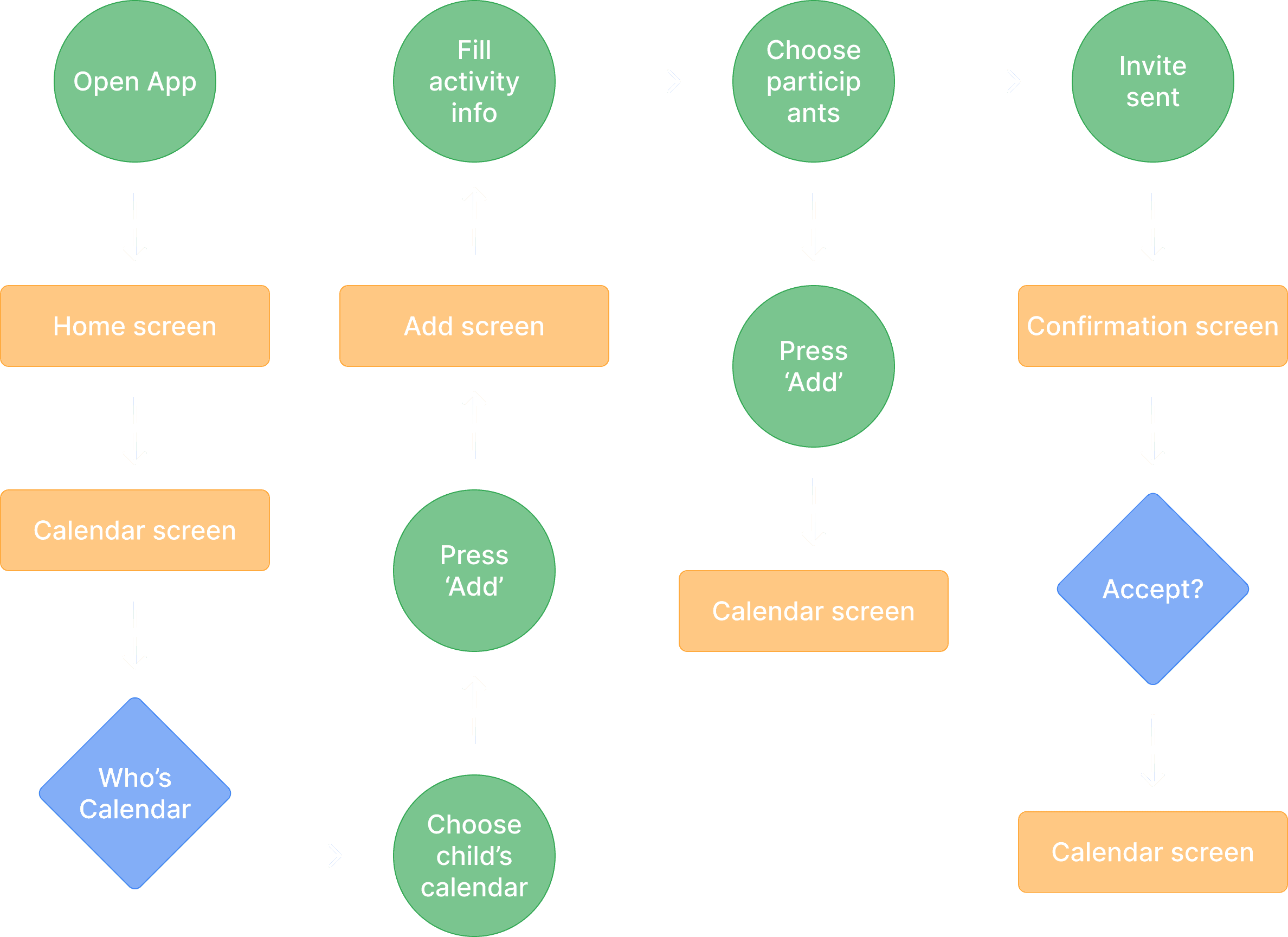
User Flow
User Flow
User Flow
Instead of relying on one-on-one guidance, we aim to empower PSWs with an AI-powered resource tool, which is centralized, searchable, and easy to update.
Instead of relying on one-on-one guidance, we aim to empower PSWs with an AI-powered resource tool, which is centralized, searchable, and easy to update.
Wireframes
Wireframes
Wireframes
Instead of relying on one-on-one guidance, we aim to empower PSWs with an AI-powered resource tool, which is centralized, searchable, and easy to update.
Instead of relying on one-on-one guidance, we aim to empower PSWs with an AI-powered resource tool, which is centralized, searchable, and easy to update.


Interactions
Interactions
Interactions
Instead of relying on one-on-one guidance, we aim to empower PSWs with an AI-powered resource tool, which is centralized, searchable, and easy to update.
Instead of relying on one-on-one guidance, we aim to empower PSWs with an AI-powered resource tool, which is centralized, searchable, and easy to update.

Calendar filter
Calendar filter
Easily filter calendars by family member and availability — plan with confidence.
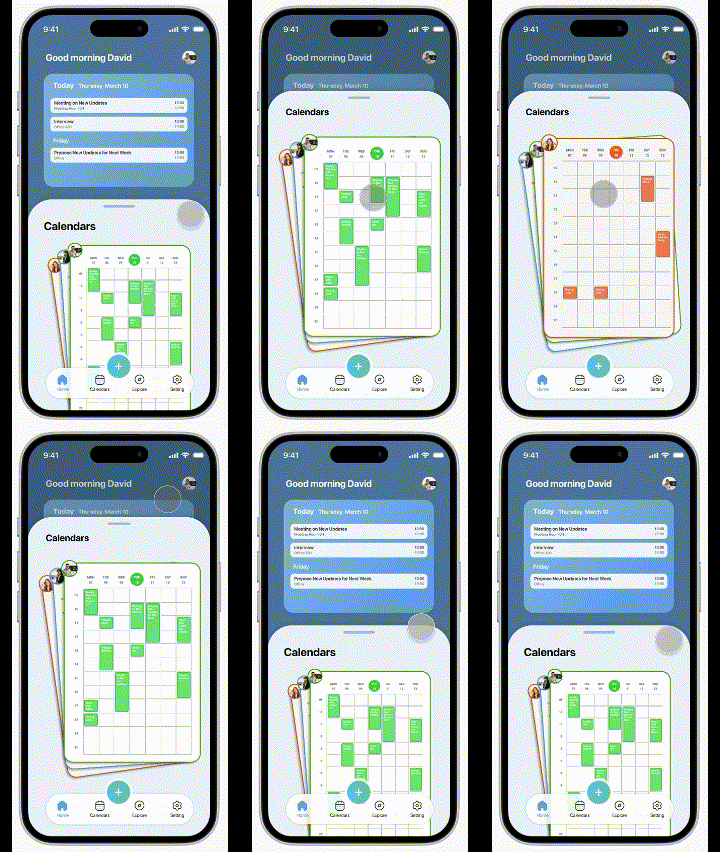
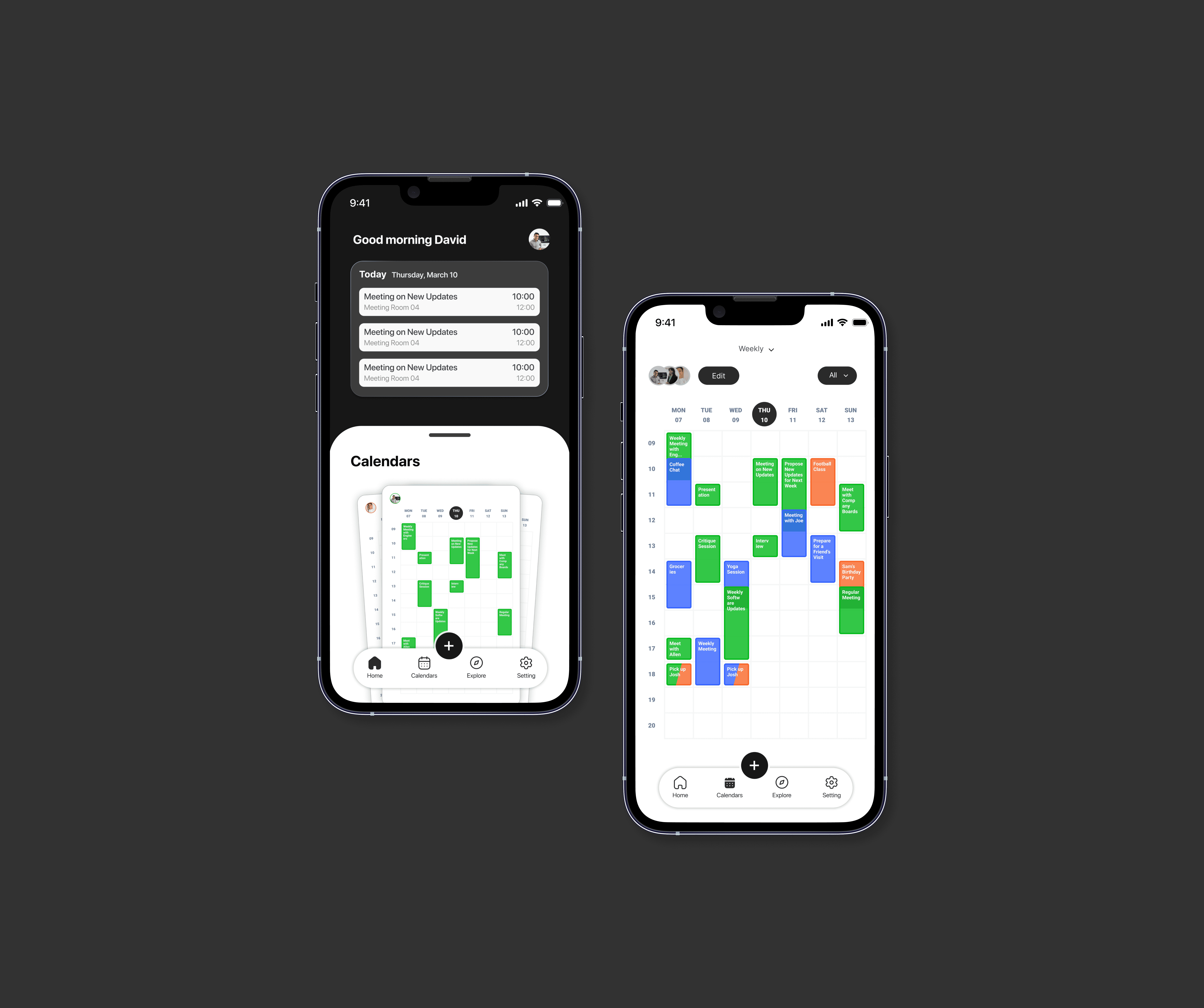
Stacked Calendars
Stacked Calendars
Preview family members' calendars in one place, stacked together as a family.
Hi-fi prototype
Hi-fi prototype
Hi-fi prototype
Instead of relying on one-on-one guidance, we aim to empower PSWs with an AI-powered resource tool, which is centralized, searchable, and easy to update.
Instead of relying on one-on-one guidance, we aim to empower PSWs with an AI-powered resource tool, which is centralized, searchable, and easy to update.